
Backrest is a web interface and orchestrator for restic backups.
It gives restic a more visual layer for creating repositories, browsing snapshots, scheduling backups and restoring files. The project is available here: garethgeorge.github.io/backrest.
I use Backrest on my home server because backups are important, but I also want them to be easy to check.
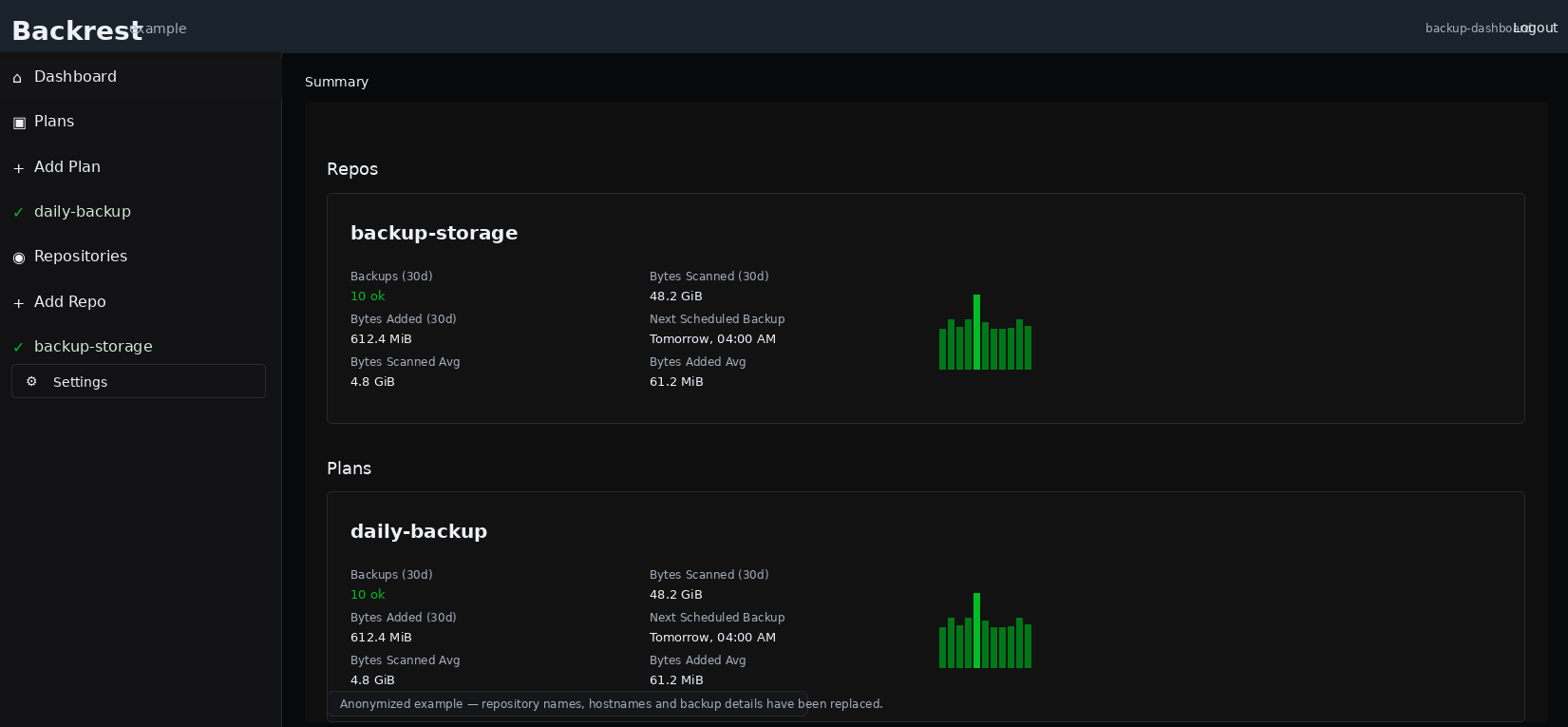
That is the main value for me. It makes backups more visible.
What I use it for
- Running scheduled backups.
- Checking whether backup jobs completed.
- Browsing snapshots.
- Restoring files when needed.
- Keeping backup status easier to see.
Restic is already a strong backup tool, but it is mostly command-line based. Backrest makes the day-to-day backup overview easier to work with from a browser.
What works well
Backrest makes backups feel less hidden.
I can see plans, repositories, snapshots and job history in one place. That is useful on a home server, where backups can otherwise become something that was configured once and then quietly forgotten.
The restore view is also important. A backup is only really useful if you can get data back from it.
What I would keep simple
I would start with the services and folders that actually matter.
Not every experiment needs to be backed up forever. But anything that contains documents, notes, photos, configuration, databases or other useful data should be considered carefully.
For me, the goal is not to back up everything blindly. The goal is to understand what I would miss if the server broke.
A few practical tips
- Start with the data that would be annoying or difficult to recreate.
- Keep backup plans understandable and named clearly.
- Check job history from time to time.
- Test restore before you fully trust the setup.
- Do not treat a backup as working just because it exists.
What to be careful with
Backups can contain a lot of sensitive information.
Documents, photos, databases, notes and configuration files may all end up inside backup snapshots. That means backup storage, access and retention should be handled with care.
It is also worth remembering that a web interface makes backups easier to manage, but it does not remove the need to understand what is being backed up and where it is stored.
Verdict
Backrest is a useful tool if you already use, or want to use, restic backups but prefer a clearer interface around them.
It makes backup jobs easier to see, snapshots easier to browse and restores easier to approach.
For a home server, that is a very practical kind of value.
This note is part of a small series about self-hosted tools I use on a home server.